@pianowizard,
There were two separate polls, but the results of the aspect-ratio question were never published, unlike the screen size. The results on the screen size question:
http://blog.lenovo.com/uploads/general/ ... rvey_2.jpg
pianowizard wrote: ↑Sun Sep 17, 2017 7:53 am
Let me put this another way: had there been a poll asking people to choose between 14" 16:9 and 12" 3:2 or even 12" 16:10, people would have preferred 12" 3:2 (or 12" 16:10), AND YOU KNOW THAT.
Thats just your opinion. I for example have no use for a 12" system and considering the results of the screen size question it seems most people prefer bigger systems. Such a 12" system would be equipped with a smaller keyboard (less width), which is absolutely useless for me. I don´t need the absolute portability.
@summilux,
IdeaPads don´t have the business focus and lack the necessary features, services and support. While Lenovo certainly could make them business-ready, this would also mean an increase in price. Also, you would end up with devices that have both features that consumers don´t care for and features that businesses don´t care for - a mish-mash that doesn´t work.
Your point about the price is true. Thats the reason why there are more expensive business focused lines such as the X1 line for Lenovo or the HP Elitebook 1020/1040 lines. There are different Enterprise customers with different wants and needs. The bulk of the sales however is dependent on price, this is where the PC companies like Lenovo or HP make their big revenue, with machines like the ThinkPad L470 or T470 or the HP Probook 640 or Elitebook 840. While the manager may get the X1 or Elitebook 1040, the normal office-employee does not get that luxury machine. And even these more expensive machines are under high-pressure of price competition, its just on a higher level.
The problem with telling customers that square screens is better for productivity is thats it not generally true. There are use cases where wider screens are better. And adding to that, the low-res 4:3 screens with XGA resolution that were standard for years (with UXGA and SXGA being much more rare) were certainly worse than the WXGA and HD screens that replaced them, because they offered even less space. Higher-resolutions made up a very small portion of the market until very recently. In the last years, FHD is very slowly replacing HD as the standard for most laptops. Plus, 16:9 has not replaced 4:3, it was 16:10, which is less compromised than 16:9. 16:9 then replaced 16:10 because it became clear that the majority customers didn´t mind the slightly wider screens.
Coordination between PC manufacturers kept 16:10 12" and 14" panels in production for one more year, but in the end, the display manufacturers have the power in this struggle.
Summilux wrote: ↑Sun Sep 17, 2017 8:09 am
It's funny that you point this out, because, have you not realised that Lenovo had (and still do but to quite a lesser extent) exactly the same advantages ?
I knew that you would bring that up. The problem with this argument is that it falls apart because IBM tried to do the exact same thing and it failed - which led to the sale of the PC segment to Lenovo. So why should Lenovo have continued with a strategy that failed and only produced a loss for IBM? It doesn´t make sense. Its not even like Lenovo didn´t try to do something in this direction, thats why the X300 exists. But this model was just another failure. Just like the very expensive W700-line.
The reason for this is a substantial change in the PC market that was out of IBMs control. PC prices dropped, Intel & Microsoft reaped the profits and competitors from Asia came in to offer PCs even cheaper. Operating in such a market means you have to compete on price or you die, IBM didn´t want to, because they only want to do high-margin stuff.
The irony is that IBM could have continued on like this, keep loosing money and keep making ThinkPads as an expensive hobby, because they were not dependent on the PC, it was just one of their business-segments. But of course, IBM is a profit-oriented company and so they sold it off.
Regarding Smartphones, of course Google/Qualcomm are powerful, but this market is still very open compared to PCs. Anyone can do their own version of Android without the Google stuff (which is what some manufacturers do) and there are many other CPU manufacturers than Qualcomm. Samsung and Apple, the two biggest players in the Smartphone market, have their own CPUs. This keeps CPU prices down, Qualcomm can´t easily demand rip-off prices like Intel could in the PC market for a long time.
Summilux wrote: ↑Sun Sep 17, 2017 8:58 am
I love this guy !

If you love this guy, you should also watch this video:
https://www.youtube.com/watch?v=JfO8ZHWPZ80
I don´t like some of his videos because I find his style pretty obnoxious sometimes, but I do agree with many things he says in this video.
@puppy,
Puppy wrote: ↑Sun Sep 17, 2017 8:27 am
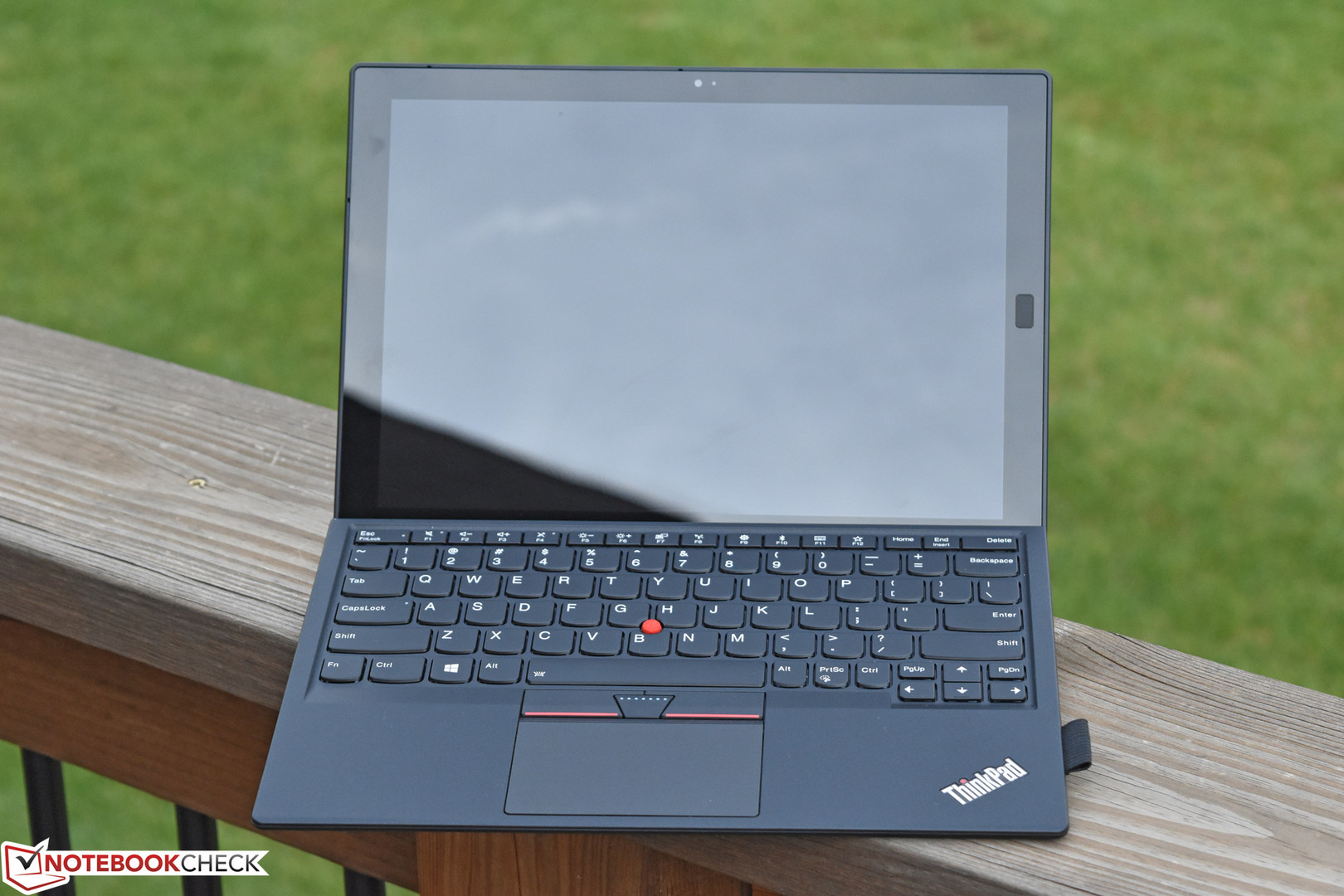
@ibmthink: What about X1 Tablet? Do you think it is that popular so it deserves to bother with "non-standard" 3:2 display component compared to what success 3:2 Retro ThinkPad could have been?
I just explained to you that the X1 Tablet uses a 12" 3:2 screen that is standard, so no, its does not bother with "non-standard".
How popular that one is, I don´t know. What I certainly know is that the Microsoft Surface Pro is very popular and the X1 Tablet is the ThinkPad to cover this market.


 Homepage
 Forum
Forum Drivers
 HMM-Manuals
 MTM
MTM Feed
Feed


 ? And if yes, since we are talking custom panels then decrease the other dimension 1.6mm and congrats you just squeezed a 16:10 screen into the lid of the T470. The screen diagonal would still grow by 8.22mm so noone can complain it's not 14".





 40 cents a day. I think I can budget 40 cents a day even if the up front payment is hefty.